
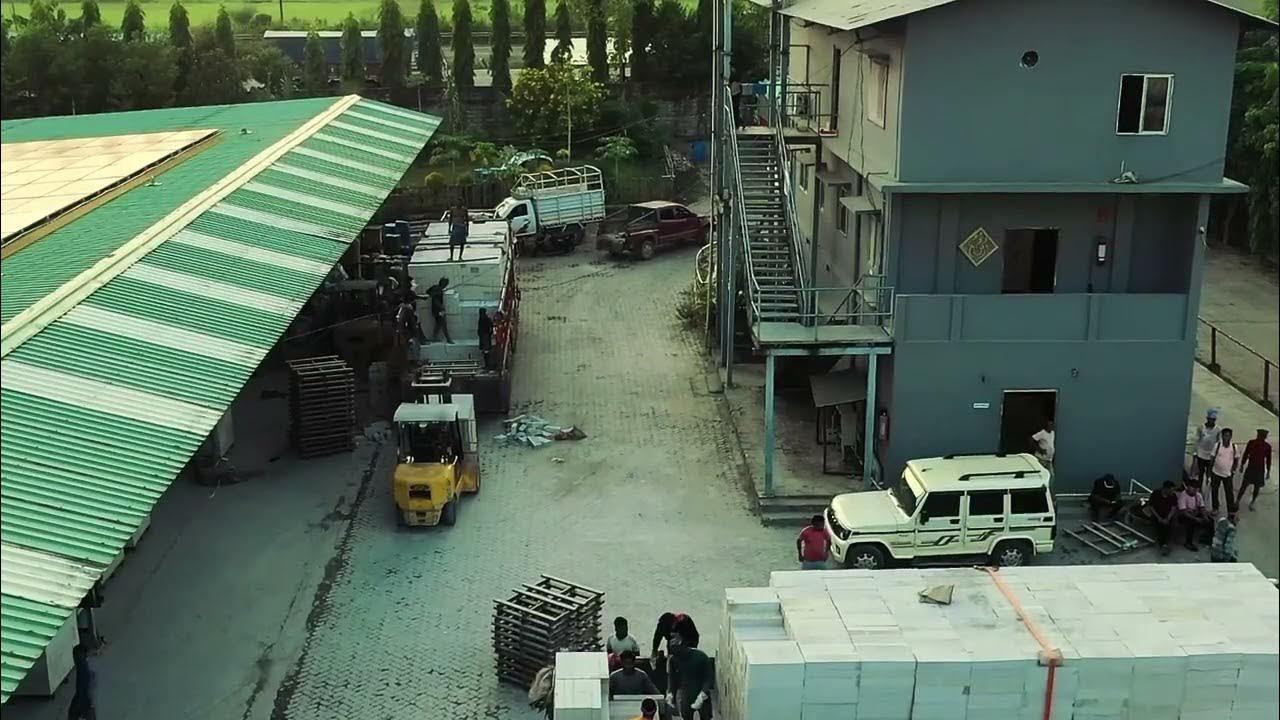
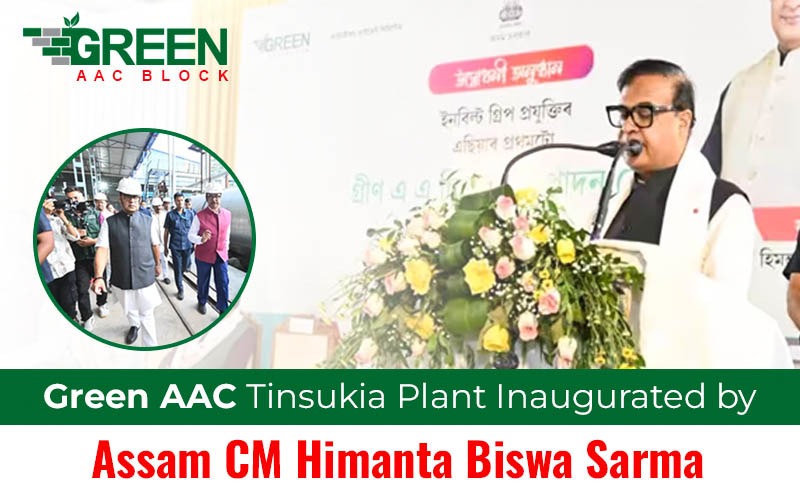
Green AAC has expanded its manufacturing presence in Assam with the inauguration of a new Autoclaved Aerated Concrete (AAC) block manufacturing facility in Hapjan, Tinsukia, on 29 October 2026.
Inaugurated by Assam Chief Minister Dr.HimantaBiswaSarma, the ₹55 crore facility marks an important milestone in the company's growth and strengthens access to modern building materials across Upper Assam and neighbouring Arunachal Pradesh.
With an annual production capacity of 2 lakh cubic metres, the new plant will support the region's growing construction requirements while advancing Green AAC's focus on quality, innovation and resource-efficient building solutions.
Expanding Access to AAC Blocks Across Assam
Green AAC already operates manufacturing facilities in Rangia and Silchar. The addition of the Tinsukia plant further strengthens its manufacturing network and improves its ability to serve customers across Assam and the wider Northeast.
Strategically located in Upper Assam, the facility is positioned to serve builders, contractors, developers and homeowners in the surrounding districts and neighbouring Arunachal Pradesh.
By bringing AAC block manufacturing closer to these markets, Green AAC aims to improve product accessibility, support regional construction projects and meet the evolving needs of the building industry.
The expansion also reflects the growing importance of locally accessible building materials as infrastructure development and urbanisation continue across Northeast India.
Supporting Resource-Efficient Construction
Autoclaved Aerated Concrete (AAC) blocks are lightweight building materials known for their thermal insulation properties, dimensional accuracy and ease of installation. Their lower weight compared with conventional clay bricks can also help reduce structural dead loads when used in appropriately designed buildings.
These properties make AAC blocks a practical option for a wide range of residential, commercial and institutional construction projects.
The Tinsukia facility has an annual production capacity of 2 lakh cubic metres, equivalent in volume to approximately 10 crore conventional red bricks, according to figures reported at the inauguration.
Chief Minister Dr.HimantaBiswaSarma highlighted the potential environmental benefit of wider AAC adoption, particularly in reducing dependence on conventional fired-clay bricks. Traditional brick manufacturing uses clay sourced from the earth, including agricultural land in some areas.
Expanding the availability of AAC blocks offers builders another option when selecting construction materials. The overall environmental impact, however, depends on factors such as raw materials, manufacturing processes, transportation and the building's intended use.
For Green AAC, the expansion represents an opportunity to make modern building solutions more accessible while supporting the construction sector's evolving material requirements.
A ₹55 Crore Investment in Assam's Manufacturing Sector
The Tinsukia manufacturing facility was developed following an investment commitment associated with the Advantage Assam 2.0 Investment and Infrastructure Summit.
With an investment of approximately ₹55 crore, the project represents a significant addition to Tinsukia's private-sector manufacturing landscape.
Its annual production capacity of 2 lakh cubic metres will help Green AAC serve demand across Upper Assam and neighbouring regions. The facility also strengthens the company's ability to expand its market reach and support construction projects with a more localised supply network.
The inauguration highlights the role of private investment in strengthening Assam's industrial infrastructure and creating opportunities in regional manufacturing.
Introducing Advanced AAC Manufacturing Technology
A key feature of the new Tinsukia plant is its AAC block manufacturing technology incorporating an in-built grid system.
During the inauguration, Chief Minister Dr.HimantaBiswaSarma stated that this technology was being introduced for the first time in Asia at the facility.
The development highlights the potential for technological advancement within Assam's building-materials manufacturing sector. The specific technical features and performance benefits of the in-built grid system can be further explained through verified product and engineering specifications.
AAC blocks are manufactured using a cementitious mixture that typically includes materials such as cement, lime, silica-rich material, gypsum, water and an aerating agent. The aeration process creates a cellular structure that gives AAC its characteristic lightweight properties.
Depending on the product specifications, AAC blocks can offer advantages in handling, installation and thermal insulation. Their performance depends on the manufacturing process, product quality and suitability for the intended application.
Through the Tinsukia facility, Green AAC aims to strengthen the availability of AAC blocks and support the changing requirements of the construction industry.
Generating Employment and Regional Opportunities
The new facility is expected to contribute to employment and economic activity in and around Tinsukia.
Figures reported at the inauguration indicate that the plant is expected to generate around 80 direct jobs, with approximately 75 additional employment opportunities through contractors.
More than 500 people could also benefit indirectly through associated suppliers, vendors, retailers and other businesses connected to the facility's operations and distribution network.
Beyond direct manufacturing, the plant's regional supply chain may create opportunities for logistics providers, construction-material dealers and other local businesses.
These opportunities form part of the wider economic contribution that industrial investments can make to regional development.
Strengthening Green AAC's Presence in Northeast India
Green AAC operates under Lightbricks Private Limited, part of KD Group of Industries. With manufacturing facilities in Rangia, Silchar and now Tinsukia, the company continues to strengthen its presence across Assam.
Alongside AAC blocks, Green AAC also offers complementary construction products, including Green Bond AAC Block Adhesive, designed for use with AAC block construction in accordance with product specifications.
The Tinsukia facility marks another step in the company's efforts to serve builders and homeowners across Northeast India with accessible building materials and modern construction solutions.
As infrastructure development continues across Assam and neighbouring states, Green AAC aims to build stronger regional supply networks and support the growing demand for contemporary building materials.
At Green AAC, we believe better construction begins with informed material choices. Our Tinsukia facility brings us closer to that goal by expanding access to AAC blocks across Northeast India.